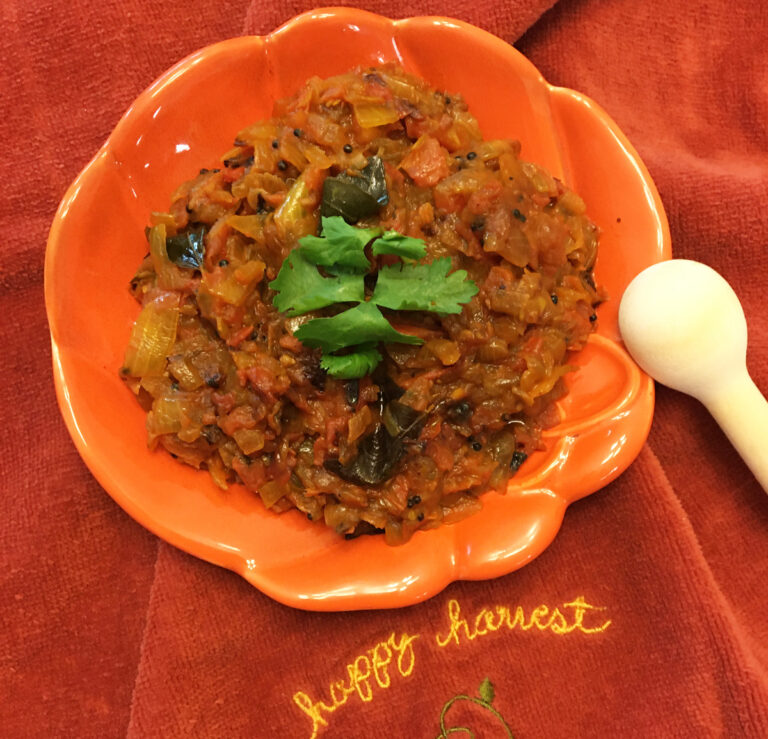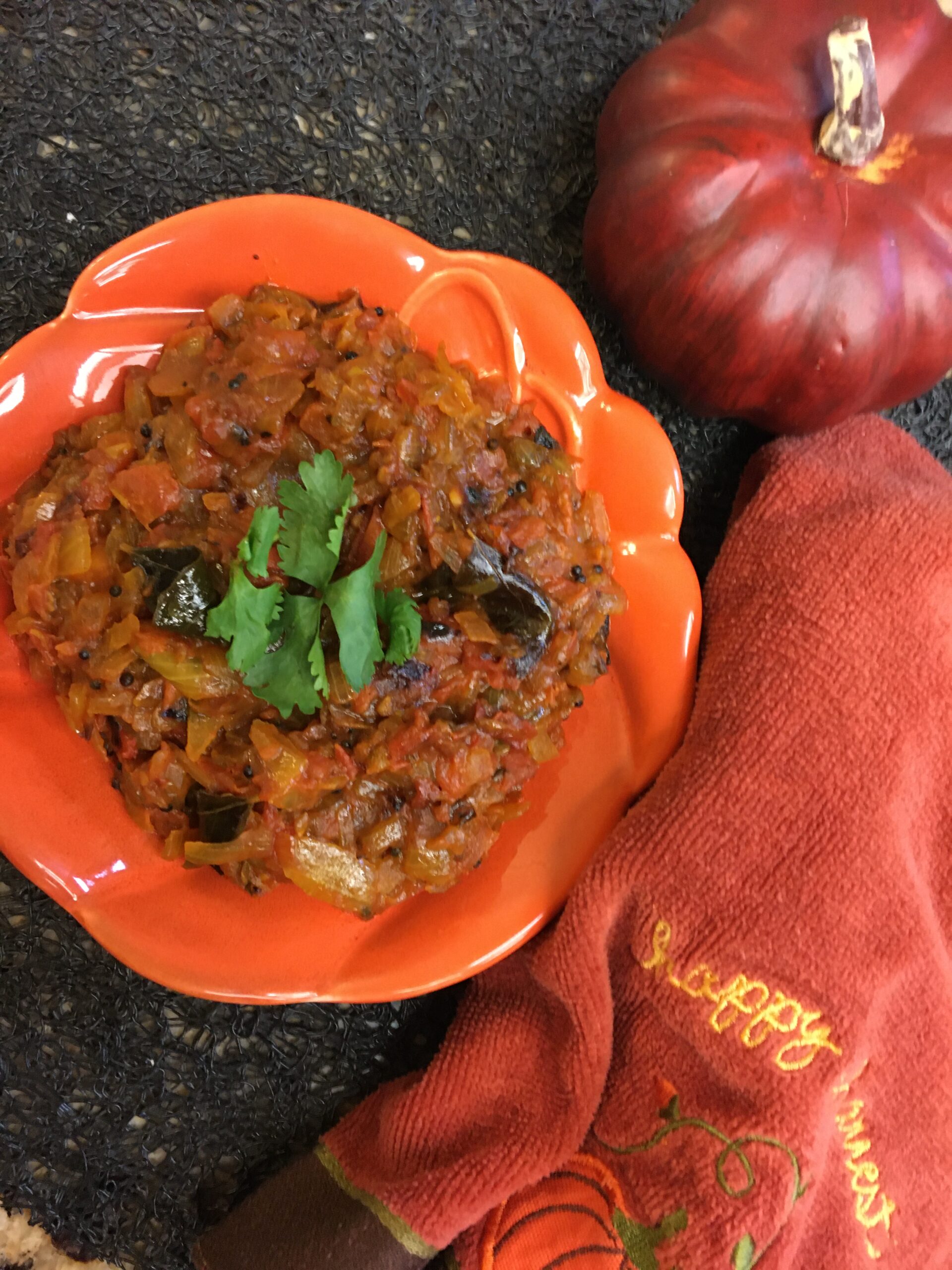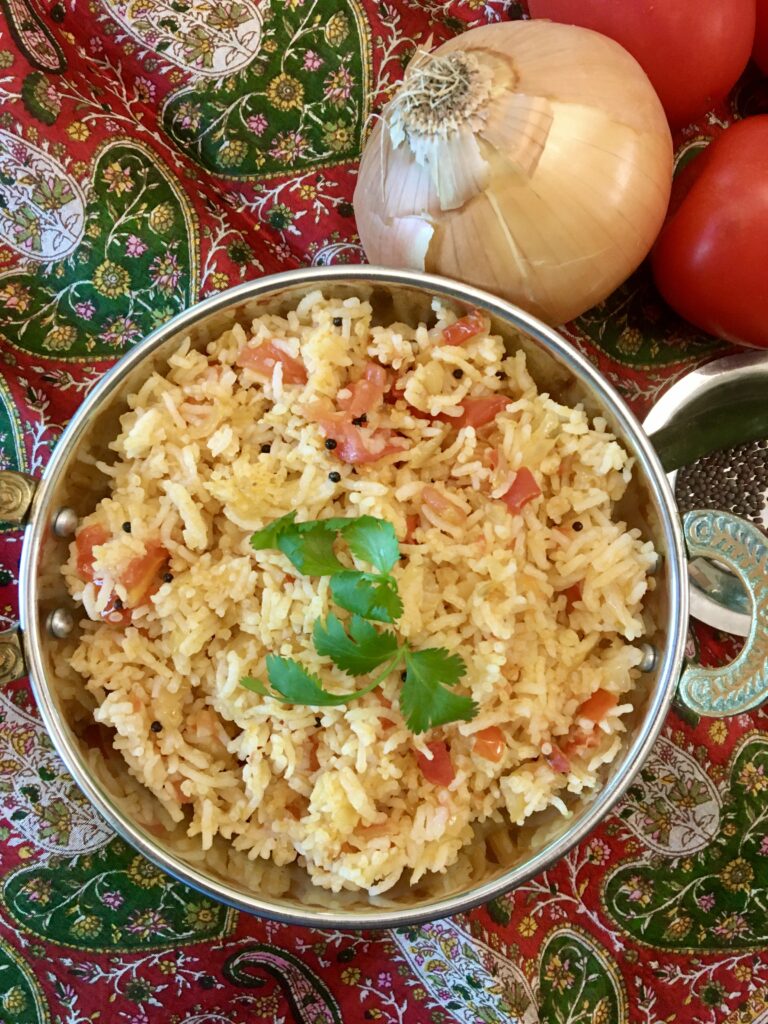
Today being Sunday, my husband and I have been binge-watching taped shows all afternoon. Evening tea is over, and I start thinking about dinner. The fridge yields a large bowl of cooked rice. Always looking for ways to turn over leftovers into a new dish, I decide to fix Tomato Rice. I normally serve it with masala fish, fish curry, or a curried dal.
I decide to take the easy way out and serve it with some frozen marinated fish I picked up while grocery shopping. This dish can also be used as a side for meals prepared with a western flavor. It pairs well with most cooking styles of meat, fish, or poultry. You can omit the curry leaves.
With the fish and tomato rice, I fix a garden salad to complete the meal, and Voila! dinner is served!
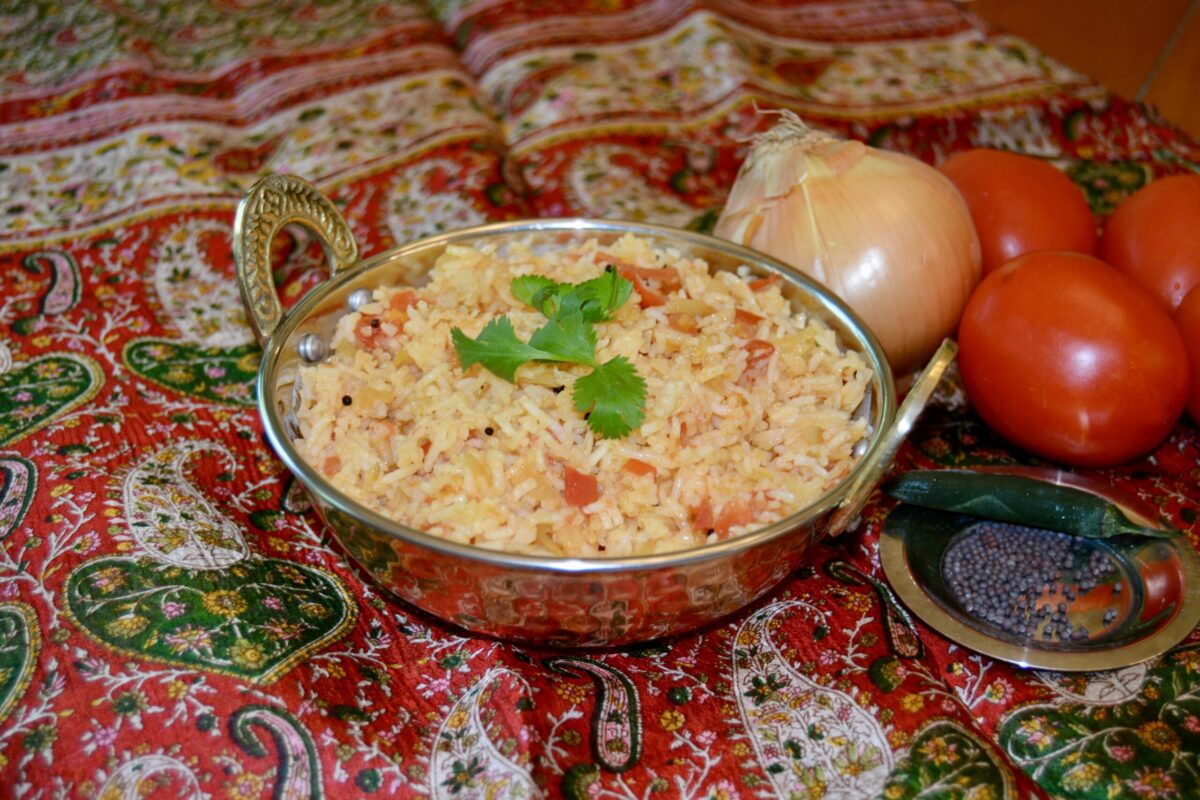
Tomato Rice (Tamatar Chawal)
A savory rice tossed with tomatoes and spices that goes well as a side dish to complement any meal.
Ingredients
- 4 cups cooked long-grained white rice (like Basmati or Jasmine )
- 4 medium tomatoes (diced )
- 1 medium yellow onion (or shallots, diced)
- ½ tsp black mustard seeds
- 10 fresh curry leaves (optional, available at an Indian grocery store)
- 1-2 medium green chilies, diced (to your taste)
- 1 tsp salt (to your taste)
- 1 tbsp fresh green cilantro (chopped finely)
- 2 tbsp cooking oil
Instructions
- In a 10-12" frying pan or wok, heat the oil on medium heat. When hot, add the mustard seeds, watch out for the splutter! About 30 seconds.
- Add the curry leaves and green chilies. Stir for 30 seconds.
- Add the onions. Sauté for 3-4 minutes until translucent.
- Add the tomatoes. Continue to sauté stirring occasionally for 5-6 minutes, then add the rice.
- Sauté for another 10 minutes until the rice is nice and hot and the onions and tomato mixture are well incorporated into the rice. The juice from the tomatoes should leave the rice moist but not soggy.
- Spoon into dish and garnish with cilantro.
Notes
If you're using cold rice from the refrigerator, break up any lumps. I prefer to do this with my fingers beforehand or while adding the rice as I am able to make sure all the rice is separated well.
Variations:
1. Add 1 cup of cooked peas and carrots after tomatoes are done. Stir for a minute and then the rice in. You can also use any canned drained bean of your choice instead of the peas and carrots
2. In a separate bowl, whisk 4 eggs. After the tomatoes are cooked, add the beaten eggs. Scramble the eggs in the tomato mixture, and then add the rice. I also add the peas and carrots, which makes it an easy, one-dish meal.
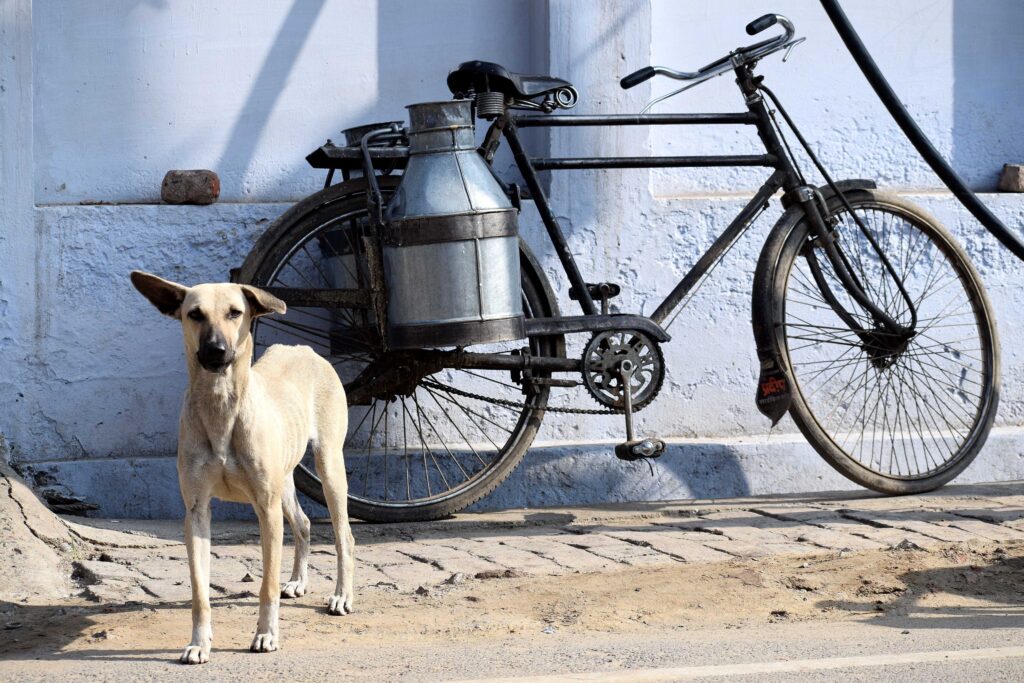 The milk is delivered from the local doodhwala (milkman), who rides in on his bike with two huge milk cans of fresh milk tethered to either side of the metal back seat. It always amazes me how he manages to balance those heavy-laden cans that are strapped to his bicycle. He arrives diligently twice a day, morning and evening, ringing his bicycle bell loud and clear to announce his arrival. He dips a measured ladle with a large handle into the can and pours the milk into the dekchi (a flat-bottomed cooking pot) held out to him. Since it is not pasteurized, the milk has to be boiled.