
Dad is stationed in the town of Ajmer in the northwest of India. Ajayadeva, an 11th-century Rajput ruler, founded it. It surrounds the expansive lake of Ana Sagar and is surrounded in part by the Aravalli Hills range. Ajmer’s most historic landmark is the Sharif Dargah, considered among India’s holiest Muslim shrines. Khwaja Moin-ud-din-Chishti, a Sufi Saint from Persia, is enshrined there. Pilgrims worldwide visit to be blessed by the Khwaja and have their wishes and desires come true.
Ajmer is 8 miles from Pushkar, a town that hosts the Pushkar Mela (Fair). It is one of the world’s largest camel/cattle fairs. Like all fairs, it holds other attractions, amusements, local arts, crafts, and food. Multitudes descend on Pushkar to enjoy the fair. Pushkar Lake, located by the town, is a sacred lake to the Hindus.
Ajmer is different from the other towns we have lived in. It is a semi-desert, arid climate.
Dust storms precede the monsoon season—with its welcome rain and coolness from the heat. These dust storms kick up the dry earth and transport it with strong winds into every nook and cranny. It is like a sandstorm; you better get inside if you see it coming!
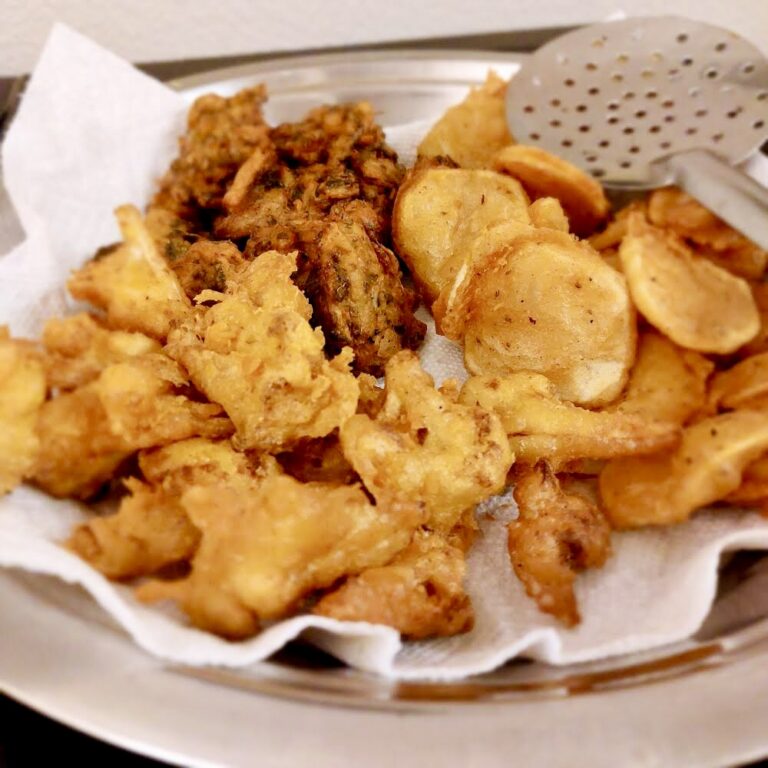
One such storm is on its way. The wind is picking up, and the sand blots out the sun. Mama calls out to us kids to shut all the doors and windows. We scramble. The dust storm hits and soon passes, followed by the sweet smell of rain. It is pretty heavy for the long-awaited monsoon season’s first rain. I can smell the dry earth soaking up the moisture. Since it is tea time, Mama has cook fix us pakoras to accompany evening tea. They are perfect for a rainy monsoon evening!
Pakoras (aka Bhajis) are deep-fried fritters or dumplings made with chickpea flour (besan). The chickpea flour used is the Indian small brown chickpea, not the garbanzo chickpea. You can fix pakoras with various vegetables such as potatoes, spinach, onions, zucchini, eggplant, cauliflower, cabbage, spinach, chilies, or a combination of vegetables. as well as paneer.
Pakoras can be made prepped in two ways. One, you dip the vegetable of your choice into the seasoned chickpea batter to coat, and then deep fry them.
The other method is to chop or grate a combination of vegetables. Add the chickpea flour and seasonings, and then deep fry them.
This recipe is the batter dipped and fried pakoras. Pakoras are served as snacks or appetizers, but generally a tea-time snack served with hot milky sweet chai.
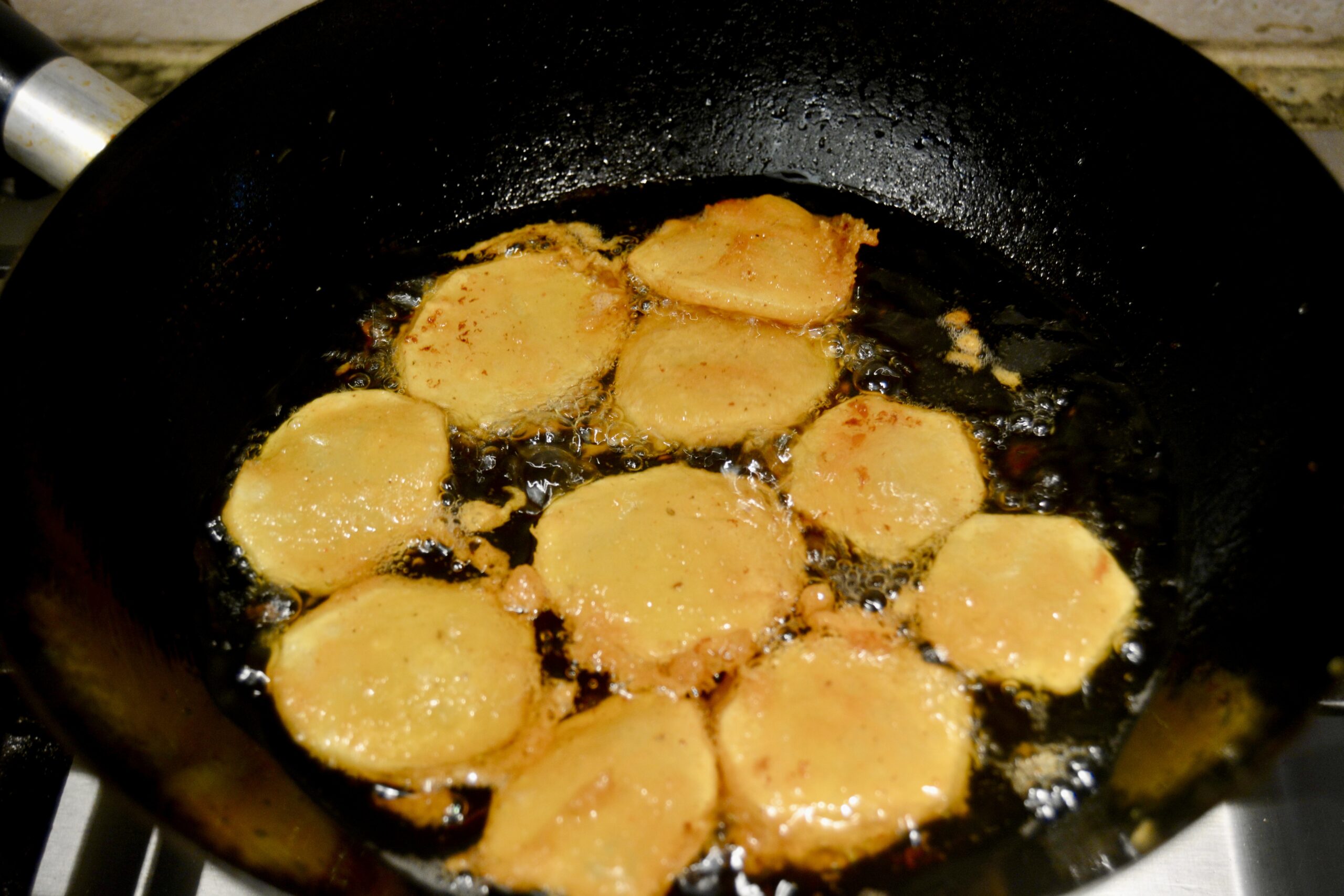
Allu Pakoras (Savory Potato Fritters)
Pakoras(aka Bhajis) are deep-fried savory fritters or dumplings made with chickpea flour(besan).
Ingredients
- 2 cups potatoes (peeled and sliced not thicker than 1/4 inch)
- 1½ cup besan (gram flour)
- ¼ cup rice flour (optional)
- ½ tsp turmeric powder
- ½ tsp cumin powder
- ½ tsp chili powder (or to your taste)
- ⅛ tsp ajwain seeds (thymol or carom seeds)
- ⅛ tsp baking soda
- 1 tsp salt (or to your taste)
- ½-¾ cups water
- 2 cups oil (for deep frying—use an oil with a high smoke point like peanut or canola, safflower, or soybean)
- Dash chaat masala or black salt (available at any Indian grocery store)
Instructions
- In a mixing bowl, combine all the dry ingredients.
- Add a little water at a time and whisk until smooth. The consistency should coat the back of a spoon. You don't get delicious pakoras if the batter is too thin.
- Scrub, peel, wash, and slice the potatoes. Keep a bowl of water handy and place the cut potatoes in the bowl as you go along. Do not cut them too thin or too thick.
- Rinse again, drain, and pat dry with paper napkins or a kitchen towel, and place them in the chickpea batter. If you don't pat or drain them dry, the excess water will thin the batter, and the pakoras will end up with a thin layer of batter.
- Heat oil on medium-high heat in a deep wok or pan (approximately 350 degrees if you use a reading thermometer).
- When hot, carefully pick each slice of potatoes from the batter and slide them in slowly and carefully into the hot oil. You can use kitchen tongs to do this. I use my fingers, but you must be careful of the hot oil.
- Deep fry in batches on medium heat till golden brown. It takes about 4-5 minutes on each side.
- Remove with a slotted spoon or sieved spatula and drain on paper towels to absorb excess oil. If any crisp bits are floating around from the batter, remove those too before you put in the next batch to fry.
- Depending on how large your fryer is, it will take several batches. Do not crowd them in.
- Sprinkle chaat masala or black salt over the pakoras and toss gently.
- Place hot pakoras on a serving dish.
- Serve with mint chutney, tamarind chutney, tomato ketchup, or hot sauce.
Notes
Rice flour absorbs excess moisture, giving the pakoras a crispier finish.
You can also cut the potatoes in half and fix many varieties of them.
Pakora Variations
 Cauliflower Pakoras
Substitute the potatoes for cauliflower flowerets. Cut about 2 cups of the flowerets to about an inch or a little more in size. Slice lengthwise and in half again in case the pieces are too broad. Wash, pat dry, dip in batter, and fry. Turn gently after 3-4 minutes. Fry until you get a nice golden brown color—approximately 8 minutes.
Zucchini Pakoras
Wash two medium zucchini, pat dry, and slice into circles. Add to batter, coat each slice well, and deep fry in batches, slowly turning them around till golden brown. Approximately 6-7 minutes.
Eggplant Pakoras
Wash the eggplant and cut it into thin circles. If you use the large Black Beauty variety, you can cut the circles in half if they are too large. Wash and pat dry. Dip in batter and fry on medium-high heat till golden brown on both sides. Approximately 8-10 minutes.
Cauliflower Pakoras
Substitute the potatoes for cauliflower flowerets. Cut about 2 cups of the flowerets to about an inch or a little more in size. Slice lengthwise and in half again in case the pieces are too broad. Wash, pat dry, dip in batter, and fry. Turn gently after 3-4 minutes. Fry until you get a nice golden brown color—approximately 8 minutes.
Zucchini Pakoras
Wash two medium zucchini, pat dry, and slice into circles. Add to batter, coat each slice well, and deep fry in batches, slowly turning them around till golden brown. Approximately 6-7 minutes.
Eggplant Pakoras
Wash the eggplant and cut it into thin circles. If you use the large Black Beauty variety, you can cut the circles in half if they are too large. Wash and pat dry. Dip in batter and fry on medium-high heat till golden brown on both sides. Approximately 8-10 minutes.
Cauliflower Pakoras
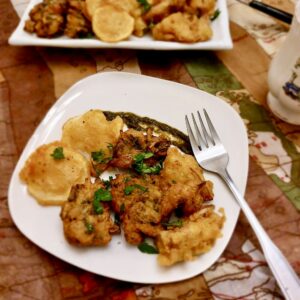
Substitute the potatoes for cauliflower flowerets. Cut about 2 cups of the flowerets to about an inch or a little more in size. Slice lengthwise and in half again in case the pieces are too broad. Wash, pat dry, dip in batter, and fry. Turn gently after 3-4 minutes. Fry until you get a nice golden brown color—approximately 8 minutes.
Zucchini Pakoras
Wash two medium zucchini, pat dry, and slice into circles. Add to batter, coat each slice well, and deep fry in batches, slowly turning them around till golden brown. Approximately 6-7 minutes.
Eggplant Pakoras
Wash the eggplant and cut it into thin circles. If you use the large Black Beauty variety, you can cut the circles in half if they are too large. Wash and pat dry. Dip in batter and fry on medium-high heat till golden brown on both sides. Approximately 8-10 minutes.

Paneer, the famous Indian cottage cheese, is very versatile and can be cooked in a variety of ways. It remains a valuable addition to the menu for vegetarians attending weddings, lunch, and dinner parties. Paneer Tikka Masala, Paneer Tikka, Palak Paneer, Paneer Pakoras, and Mattar Paneer are all popular dishes on the menu at most of these events and in Indian restaurants.
Paneer can be made at home, but it is also widely available at most Indian grocery stores. They usually come in 500g blocks (approximately 17.63 ounces). A half block is generally suitable for serving four people as a side dish when paired with curry (gravy) or other vegetables. If not, it is best to use the whole block.
Here is a simple curried recipe for paneer that uses only paneer as the main ingredient. It is flavorful and goes well with rice or roti. Unlike the famous Tikka Masala (a recipe that I will also share), you do not have to grill the paneer pieces before using them, which makes this an easy recipe for beginners. You can adjust the amount of curry in the dish. If you want to use it in a wrap, just use less water. Whether you use it as a curry to dip in or pour over your rice, it tastes delicious.
Before you start, make sure you have all your ingredients lined up, as the cooking process goes quickly once you begin.

Taridar Paneer (Paneer Curry)
A flavorful vegetarian curry that goes well with rice or rotis.
Ingredients
- 250 grams paneer (chopped into even squares )
- 1 medium onion (finely chopped)
- 2 medium tomatoes (pureed or 1 heaped tbsp of tomato paste)
- 1 tbsp ginger-garlic paste
- 1 medium green chili (optional)
- ½ tsp tumeric powder
- ½ tsp cumin powder
- ½ tsp coriander powder
- ½ tsp red chili powder (optional or you could use paprika to make it less spicy)
- ¾ tsp salt (or to your taste)
- 1½-2 cups hot water (for the gravy)
- 2 tbsp chopped fresh cilantro (coriander leaves)
- 3 tbsp cooking oil
Instructions
- Heat oil in a deep, heavy-bottomed pan or wok.
- Add the finely chopped onion. Sauté on medium-high heat until the onions turn golden. About 7-8 minutes.
- Add the ginger-garlic paste and sauté for 2 minutes. The ginger tends to stick to the bottom, so be sure to scrape the bottom while stirring (without damaging your pan).
- Now add the turmeric, cayenne, cumin, and coriander powder. Sauté for 1 minute, stirring well.
- Add the chopped tomatoes. Cook the tomatoes for 4-5 minutes, until the oil rises to the surface and the tomatoes are tender. If you are using tomato paste, then sauté for 2 minutes.
- Now add the hot water. Stir the pot.
- Cover and cook on medium for 5 minutes, until the moisture is reduced.
- Now, add the paneer and stir gently, so that you do not break up the paneer.
- Cover and cook the paneer on medium-low heat for about 2-3 minutes.
- This should give the paneer enough time to absorb the flavors of the gravy. Do not overcook, as the paneer tends to become hard.
- Remove from the burner and let it sit for 5 minutes before pouring it into your serving dish.
- Garnish with the chopped cilantro.
- This dish can be served with any of the following accompaniments: roti, paratha, pita bread, naan, plain white rice, or any simple pilaf, such as Zeera rice.
Notes
 If you want to use it in a wrap, add only 2-3 tablespoons of water. Give it a gentle stir and let it cook, covered, for 2 minutes on medium-high heat. Remove the cover and wait for the oil to surface on the sides, approximately 1-2 minutes. Turn of the heat source and let it sit for 5 minutes to absorb the flavor of the spices before serving.
Don’t add to much water to expand the dish as this can make the curry thin and watery.
If you want to use it in a wrap, add only 2-3 tablespoons of water. Give it a gentle stir and let it cook, covered, for 2 minutes on medium-high heat. Remove the cover and wait for the oil to surface on the sides, approximately 1-2 minutes. Turn of the heat source and let it sit for 5 minutes to absorb the flavor of the spices before serving.
Don’t add to much water to expand the dish as this can make the curry thin and watery. 
Tikka is a Persian word meaning pieces or chunks of meat. Tikka in Indian cooking terms can mean the same, like chicken tikka, paneer tikka, or fish tikkas. However, in Indian culture, the term “tikka” also refers to the round dot that Indian women put on their foreheads. This dot is also called a bindi. So, in India, the cooking term tikka is also a word for round patties or cutlets, like allu tikka, vegetable tikka, keema tikka, etc.
Growing up in India, most of the fish we ate was fresh, although we did have some imported canned sardines, canned herring, and other canned fish. However, we never had canned tuna. When I saw cans of tuna on the grocery shelves in the USA, I was intrigued. I soon learnt to use them to fix sandwiches and casseroles. Then one day, my twin came on a visit and fixed us some tuna cutlets. This recipe is a variation of the one she fixed.
A slightly tangy, spicy fish cutlet made together with mashed potatoes, spices, and herbs.

Masala Tuna Tikkas (Spicy Tuna Cutlets)
A slightly tangy, spicy fish cutlet made together with mashed potatoes, spices, and herbs.
Ingredients
- 1 7 oz can tuna in water (Albacore or otherwise )
- ¼ cup yellow or red onions (finely chopped-approximately 2 oz)
- 2-3 medium potatoes (approximately 9 oz )
- 2 oz fresh green cilantro (coriander leaves) (chopped)
- 1-2 tsp green chilies (optional) (finely chopped, adjust to suit your taste)
- ¼ tsp red chili or cayenne (adjust to suit your taste)
- 1 tsp cumin powder
- ¼ tsp garam masala
- ½ tsp black pepper powder
- 1 tsp amchur powder (available at your local Indian grocery store)
- 1 tsp salt (adjust to suit your taste)
- 1 medium egg ( or the egg wash )
- dash pepper and sal (for the egg wash )
- 4 tbsp oil ( to shallow fry the tikkas)
Instructions
To Prepare
- Scrub and boil the potatoes with enough water to cover them (approximately 25-30 minutes).
- Insert a skewer to check if the potatoes are done. Then, pour the hot water out of the pan and add cold water several times to cool the potatoes.
- When the potatoes are cool enough to handle, peel and mash them in a bowl. If they are still a little hot, leave to cool.
To Cook
- Open the 7 oz can of tuna and drain out all the water. Use a strainer to drain out as much as you can. Spoon into a medium-sized bowl.
- Now add the boiled and mashed potatoes along with the onions, chopped cilantro, green chilies, and spice powders. Mix well together, ensuring there are no lumps and all the ingredients are well blended. If you prefer to use a food processor, then you can put the ingredients into it and pulse a few times till coarsely blended.
- Divide the mixture into eight portions. Form into tight balls and then flatten into round, compact cutlets. Refrigerate for 10-15minutes.

- Break the egg into a wide bowl, add a dash of pepper and salt. You can also add a dash of chili powder if you like it spicier.
- Beat lightly until the yolks are blended. Set aside near your cooking area.
- Now, heat the oil in a large, deep frying pan.
- Dip the cutlets in the eggwash, drain excess wash back into the bowl, and shallow fry 3 minutes on each side till nice and golden.
- Serve with mint, coriander chutney, or ketchup. The cutlets can be used as snacks, or for lunch or dinner.


Notes
If the cutlets are not holding their shape and breaking apart while you are forming them, you can add bread crumbs or even a tablespoon of besan (chickpea flour)or corn starch to the mixture. This happens if the tuna retains too much of the canned moisture or the onions have excessive juice.
Don't flip the cutlets too soon while frying, as they may break.
If you prefer a crispy crust to your cutlets, then before you refrigerate them, dip them in the egg wash, coat with bread crumbs, and then refrigerate for 15-20 minutes.
You could also substitute canned salmon, chicken, or crab meat for the tuna. I have even used leftover rotisserie chicken that I blend separately in a processor before adding the rest of the ingredients.


My tomatoes and zucchini did not do well this summer as a sudden cold spell stunted their growth. However, the eggplant (brinjal) I planted later grew fast and furious in the abnormally hot summer heat. I planted the Black Beauty and the Japanese long variety (Ichiban). I fix the long eggplant in various ways. One of them is in this recipe.
This eggplant dish is flavorful and tangy. Good as a side or in a wrap.
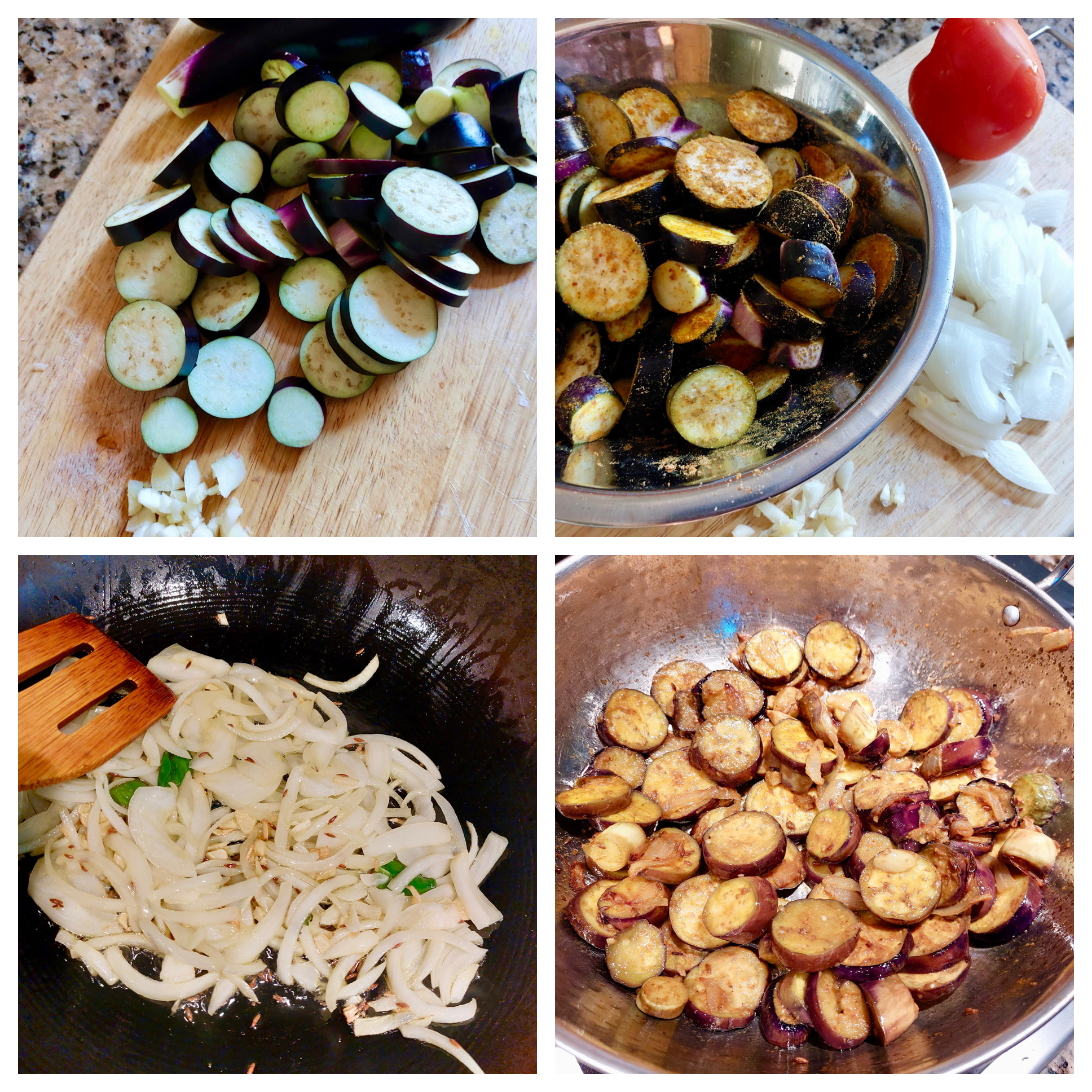
Dahi Baingan (Eggplant with Yogurt)
This eggplant dish is flavorful and tangy. Good as a side or in a wrap.
Ingredients
- 1 lb dark eggplant
- 1 medium onion (sliced)
- 1½ tsp ginger (chopped finely)
- 1 medium green chili (chopped in half)
- ½ tsp cumin seeds
- ½ tsp turmeric powder
- 1 tsp cumin powder
- ½ tsp red chili powder (optional)
- 3 tbsp plain yogurt (beaten smooth)
- ½ tsp garam masala (found in Indian grocery stores)
- 3 tbsp cooking oil
- 1 tsp salt (or to your taste)
- ¼ cup water
- 2 tbsp chopped cilantro (for garnish)
Instructions
- Wash and drain the eggplant. Cut them into round slices (not too thick) or into bite-sized bits.
- Mix all the dry spice powders and salt in a medium bowl with the chopped eggplant. Make sure the eggplant is well-coated with all the spices. Set aside.
- Heat the oil in a heavy-bottomed wok or skillet on medium-high heat.
- Add the cumin seeds, stir for about 20 seconds.
- Add the chopped green chili. Stir. Stir it. About 20 seconds.
- Now, add the chopped ginger and stir for about 30 seconds.
- Add the sliced onions. Sauté the onion for 4 minutes until it starts to turn slightly brown.
- Now add the marinated eggplant. Stir well.
- Add ¼ cup of water. Cover, turn the heat down to medium, and let it cook for 4 minutes until the sliced eggplants turn semi-soft and the oil starts to surface.
- Uncover and add the yogurt. Stir well and cook uncovered, stirring occasionally, until the oil begins to surface again and the eggplant is cooked. Approximately 10 minutes.
- After 10 minutes, taste and test it for salt. Add more, if needed. Stir. Cover and let sit for 5 minutes so that the flavors are well absorbed.
- Empty into a serving dish and garnish with chopped cilantro.
- Use in a wrap or with rice and dal or dal and roti.
Notes
If lactose intolerant, add a tablespoon of tomato paste or 2-3 tablespoons of tomato sauce. Add it after the onions are done. Cook for about 2 minutes, and then add the eggplant.
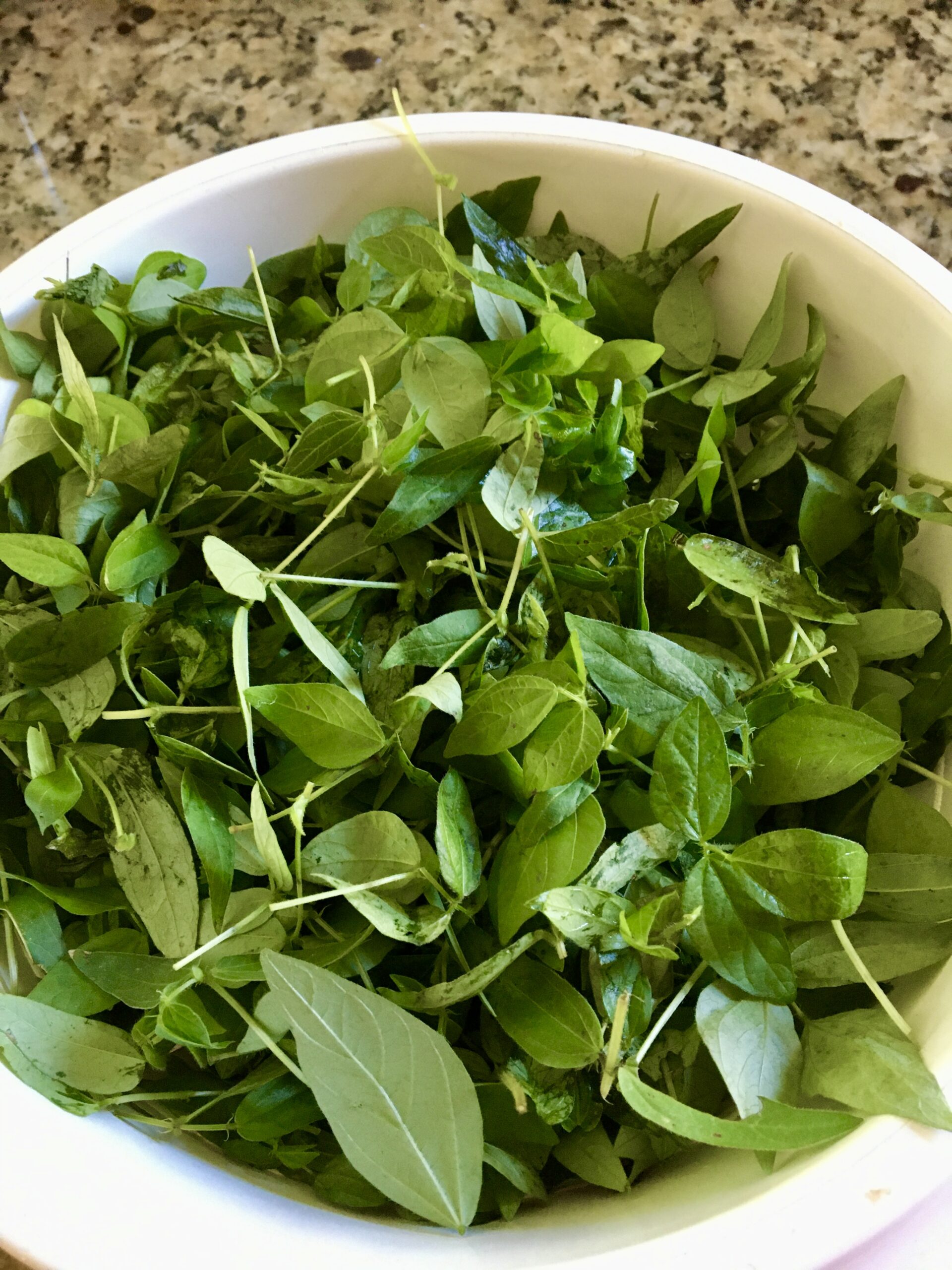
 I walk out into my backyard to pick some eggplant that are ready to be cooked. Suddenly, I spot some lush greenery in the corner of the garden by the tree I hang my birdhouse on. Strange! I do not remember growing anything in that corner.
I walk in for a closer inspection. It suddenly dawns on me what the lush green growth is.
Long story short, I had bought a bag of mung beans and left it in the pantry. A bit later, I saw some black spots on the bag. On closer inspection, I found they were weevils—a challenge when buying lentils from some of the stores. I let out a stifled shriek since I am allergic to anything creepy and crawly! My first instinct was to throw the bag of beans in the garbage can outside. Then, since I am prudent about waste, I decided to empty it in a corner of the garden so that the birds could feast on it! To my amazement, the beans must have fallen on the fertile soil in my backyard, taken root, and produced this healthy patch of greens.
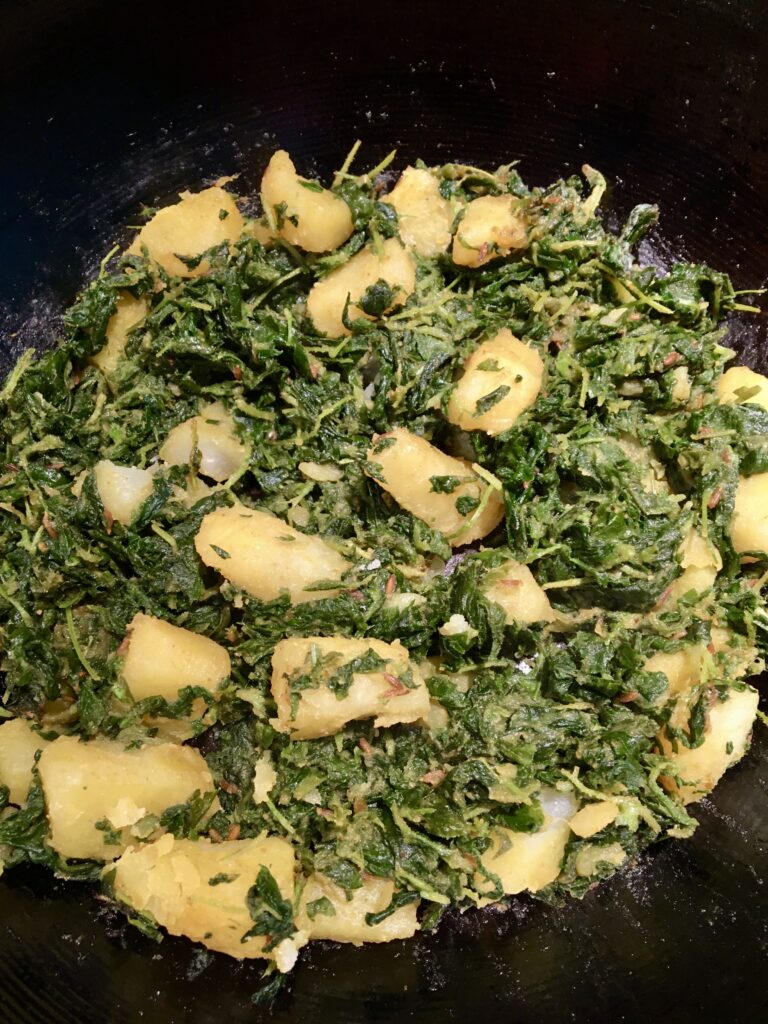
I surf the internet to see if mung bean leaves are edible. They are. I gather some tender leaves and fix a potato and mung leaves sabzi (vegetable dish).
Mung Patta Aloo Sabzi (Green/Golden Gram Leaves with Potatoes)
A healthy, delicious vegetarian side dish that pairs well with dal and rice or rotis for lunch or dinner.
Ingredients
- 2 cups Mung leaves (rinsed well and chopped)
- 2 medium potatoes (scrubbed, peeled, and chopped into two in cubes or to your preference )
- 3 tbsp cooking oil
- ½ medium onion (peeled and chopped fine)
- 1-2 whole red chili peppers (optional)
- ½ tsp whole cumin seeds
- ¼ tsp turmeric powder
- 1 tsp cumin powder
- ½ tsp salt (or to taste)
- 3-4 tbsp water (for cooking)
- garlic oil (a drizzle)
Instructions
- Place a medium wok or skillet on medium heat.
- Add the 2 tablespoons of oil and wait until hot. Sprinkle in the whole cumin seeds until they start to sizzle.
- Add the red chili. Stir for 30 seconds.
- Add the chopped onion. Sauté for about 7 minutes until the onions start to turn golden.
- Turn the heat low and add the turmeric and cumin powder. Give it a stir and quickly add the potatoes.
- Stir till the potatoes are well coated with the spices.
- Turn up the heat to medium-low. Add the chopped mung leaves and salt. Stir, then add about 2-3 tablespoons of water. Stir and cover.
- Let it cook for about 5 minutes.
- Uncover and check the potatoes. If undercooked, add another tablespoon or two of water and cook for another 3 minutes until the potatoes are almost done.
- Uncover and cook for another 8 minutes until the potatoes are cooked. Most of the moisture should have evaporated by now. Drizzle with garlic oil.
- Turn off the heat. Cover and let sit 5 minutes before serving.
- Serve with dal and roti or rice.
The Indian market for mushrooms (khumbi) was negligible when we were growing up. It was an uncommon product in the market, and warnings of mushrooms being poisonous kept many people from eating them. As such, it was never really a big part of Indian cuisine.
In recent years, mushrooms have been going up the vegetable chain into the Indian kitchen.
My first real introduction to mushrooms was in the USA when I watched my brother-in-law, Carl, slice up some white button mushrooms and sauté them in butter with a dash of salt and cracked pepper. He served them for breakfast with bacon and fried eggs. The mushrooms were delicious.
I slowly incorporated them into my Chinese stir-fries, Western casseroles, and omelets. Mushrooms, I soon learned, went well with Indian cuisine as well. I started fixing Indian sabzis (sautéed veggies) like mushroom peas curry, mushroom bell pepper, mushroom and cabbage, and mushroom korma, etc.
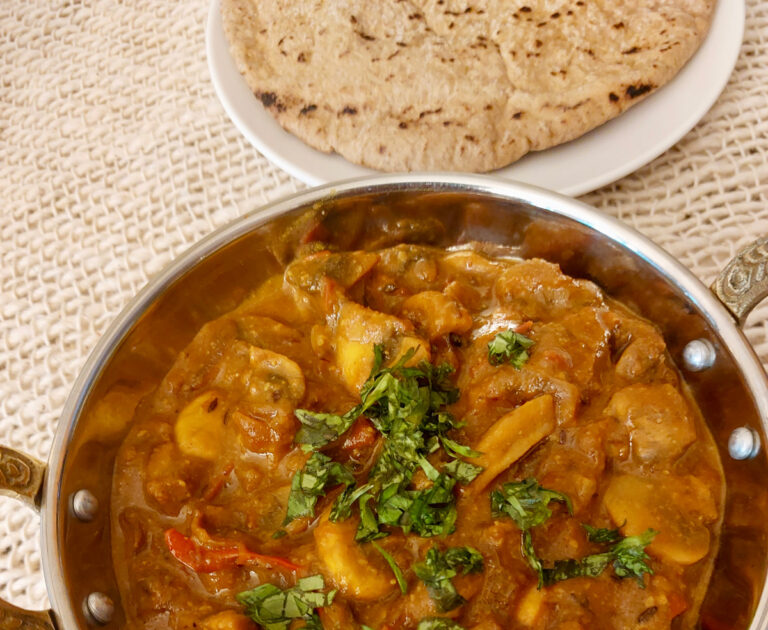
This easy mushroom curry recipe goes well with rice or roti. It is tangy with a slight bite.
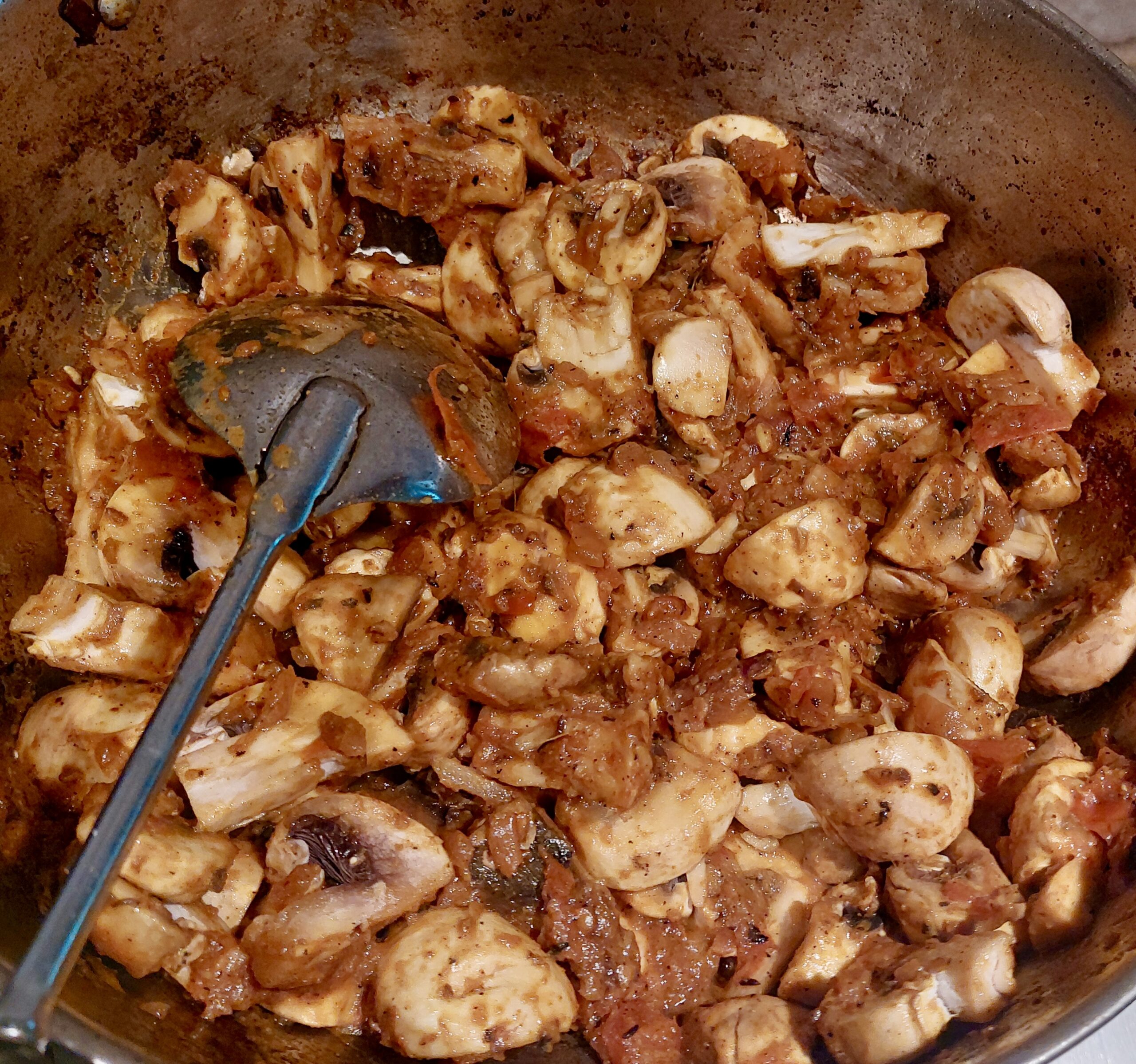
Mushroom Curry (Taridar Khumbi)
An easy mushroom curry, tangy with a slight bite, that goes well with rice or a roti.
Ingredients
- 8 oz white button or baby bella mushrooms (also know as cremini mushrooms, about 2 cups)
- 2 medium bay leaves
- 1 medium onion (sliced relatively thin, about 1 cup—if too long cut the slices in half.)
- 1 stick cinnamon (or ⅛ tsp cinnamon powder)
- ¼ tsp cumin seeds
- 1 tbsp ginger-garlic paste
- 1 small green chili, halved (or 1 dry red chili or to your taste)
- 1 large tomato (chopped fine—about ¾ cup)
- ½ tsp red chili powder (or to your taste)
- 1 tsp cumin powder ( 2tablespoons chopped cilantro/ green coriander for relish )
- ½ tsp tumeric powder
- 1 tbsp ground cashew nuts (optional)
- ¼ tsp gram masala
- 1 tsp salt (or to your taste)
- 1 cup hot water (or vegetable or chicken broth)
- 3 tbsp oil
- 2 tbsp chopped cilantro / green coriander (for relish)
Instructions
To Prepare:
- Gently wipe the mushrooms with a damp cloth to get rid of any grit.
- Slice the mushrooms in half, then slice each half into 2 or 3 slices, depending on the size on the mushroom. Try to keep the slices even.
- Set aside.
To Cook:
- Heat 3 tablespoons of oil in a heavy-bottomed skillet or wok on medium heat.
- When hot, add the green chili until it begins to brown, about 30 seconds.
- Now add in the cumin seeds. When they start to splutter, add the bay leaves and cinnamon stick, stir for about 30 seconds.
- Now, add the onions. Sauté until almost golden. About 6-7 minutes.
- Add the tomatoes and sauté for 4-5 minutes until the tomatoes are well blended.
- Next, add the ginger-garlic paste, turmeric, red chili powder, and cumin powder.
- Sauté for another 5 minutes until you see the oil surface.
- Add the ground cashew nuts and garam masala. Sauté for about 2 minutes.
- Now, add the sliced mushroom. Stir gently and well until the mushrooms are nicely coated and the oil starts to surface, approximately 5 minutes.
- Add the cup of hot water or broth. Stir. Let cook for 10 minutes, stirring occasionally.
- Turn off the heat. Sprinkle one tablespoon of chopped cilantro. Stir and let sit for 5 minutes. Pour into a serving dish.
- Garnish with remaining cilantro.
- Serve with any style of rice or roti—pairs well with other flat breads like naan, paratha, or pita.
Notes
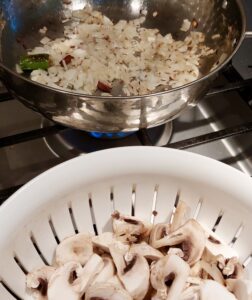 1. If you prefer to wash the mushrooms, you can, but let it drain and dry out a bit before you slice it.
2. If you want to add peas, add ¾ cup of tender peas during the last 10 minutes. You can also zap them for two minutes in the microwave and add them in the last 5 minutes.
3. If using cinnamon powder, add it when you add the other spice powders.
4. If you are allergic to nuts, omit the powdered cashew nuts or add a tablespoon of ground poppy seeds. Adding either of these thickens and lends a creaminess to the gravy.
1. If you prefer to wash the mushrooms, you can, but let it drain and dry out a bit before you slice it.
2. If you want to add peas, add ¾ cup of tender peas during the last 10 minutes. You can also zap them for two minutes in the microwave and add them in the last 5 minutes.
3. If using cinnamon powder, add it when you add the other spice powders.
4. If you are allergic to nuts, omit the powdered cashew nuts or add a tablespoon of ground poppy seeds. Adding either of these thickens and lends a creaminess to the gravy.